

Rubber is one of the most versatile materials for industrial uses. From commercial roofing to natural rubber car tires, the possibilities are endless. However, the many different types of rubber undergo various procedures to arrive at the end results. The primary differences lie in whether manufacturers are using natural or synthetic rubber for their industrial materials.
How Rubber Is Made: Four Core Processing Steps
After natural or synthetic rubber is produced, manufacturers formulate, mix, shape, and cure the material for its intended application.
Compounding: A rubber base is combined with reinforcing agents, curing systems, and other additives to create the required formulation.
Mixing: Ingredients are dispersed through the rubber in controlled stages to create a consistent compound.
Shaping: The compound is formed through processes such as extrusion, calendering, coating, casting, or molding.
Vulcanization: Heat and a curing system create cross-links in the rubber, changing properties such as elasticity, strength, hardness, and resistance to weathering.
How Is Natural Rubber Made?
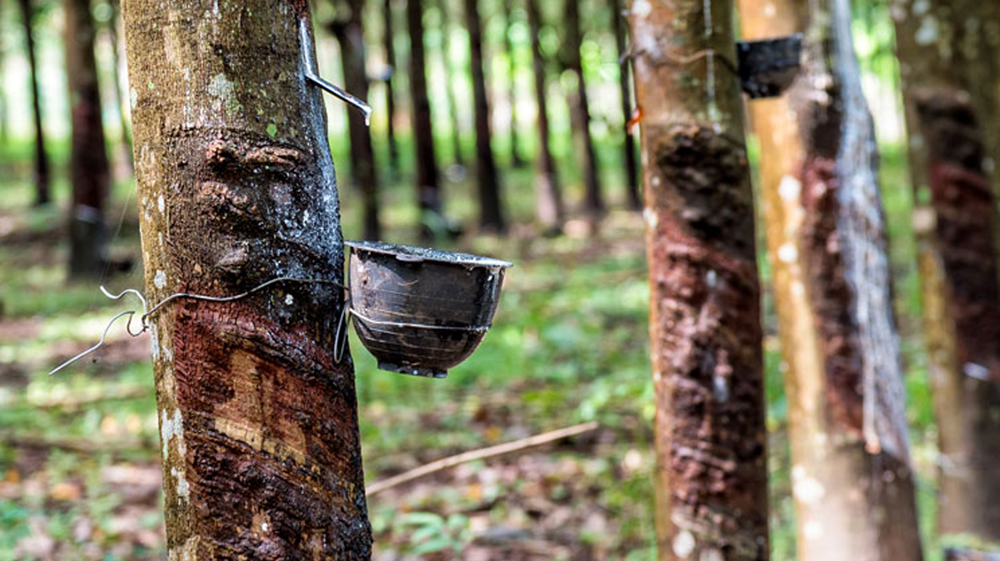
Natural rubber begins in nature. It begins at harvest when latex sap is cut or peeled back from the bark of rubber trees. This allows a white sap to flow from the tree and into cups, which are then used to fill large tanks.

One of the most common ways to process latex after this is to coagulate the substance by adding formic acid. This can take roughly 12 hours to complete. Rollers squeeze water out of the coagulants and create flat sheets of rubber, which are then dried on racks. In some cases, these materials are dried in smokehouses, but hot air can be used instead.
How Is Synthetic Rubber Made?
There are several different types of synthetic rubber, and each has a different purpose. Consequently, the manufacturing processes can vary greatly. The starting point they share in common is that they are created from chemicals and polymerization instead of natural resources. Some of the most common source materials include coal, oil, and other hydrocarbons.
Manufacturers then produce naphtha by refining these ingredients. Naphtha is then combined with natural gas to create monomers. Rubber is created by converting this to chains of polymers, which require steam and vulcanization.

How Is Rubber Processed?
Regardless of whether the rubber is natural or synthetic, the processing options are generally the same. Additional processing compounds the rubber so it can be used for a variety of industrial purposes. These are the four main steps.
1. Compounding (Formulating)
Adding chemicals to a rubber base creates rubber compounds. Chemicals can stabilize the polymers or reinforce the strength of the rubbers. Sometimes, compounding can also stretch the rubber, which reduces the final cost.
2. Mixing
Similar to compounding, this step includes additives that are mixed in with the rubber. To improve ingredient dispersion and avoid raising the temperature too high, professional mixers complete this in two steps. First they create a masterbatch that includes additives, such as carbon black. After cooling the rubber, they then add the chemicals necessary for vulcanization.
3. Shaping
Some of the common shaping techniques include coating, extrusion, casting, calendering, and molding. Depending on the final product, manufacturers could rely on several shaping techniques.
4. Vulcanization
Vulcanization is a chemical process in which the rubber, natural or synthetic, is heated with sulfur, accelerator, and activator. This process forms cross-links between long rubber molecules, which improves elasticity, resilience, tensile strength, viscosity, hardness, and weather resistance. This is the final step of the process. In the past, this took up to five hours. Due to modern-day advancements, vulcanization can be completed in 15 to 20 minutes.
From Rubber Formulation to Finished Application
Material selection, compounding, and processing decisions shape how an industrial rubber product performs.
Understanding how rubber is made is the starting point. Industrial applications also require the appropriate compound, manufacturing process, tolerances, durability profile, and production controls for the intended environment.
AirBoss Rubber Solutions develops and manufactures custom rubber compounds for industrial applications. Teams evaluating material performance, production requirements, or supplier capabilities can review AirBoss Rubber Solutions and related AirBoss manufacturing resources.
Industrial Rubber Manufacturing FAQs
How is industrial rubber made?
Industrial rubber starts with natural rubber, synthetic rubber, or a combination of materials. Manufacturers formulate and mix the compound, shape it for the intended product, and vulcanize it to develop the required physical properties.
What is the difference between natural and synthetic rubber?
Natural rubber is produced from latex harvested from rubber trees. Synthetic rubber is produced through polymerization using chemical feedstocks. The appropriate material depends on the application’s required properties, environment, and manufacturing process.
Why is rubber compounded?
Compounding combines the rubber base with reinforcing agents, curing systems, and other additives. The formulation is developed to support the physical properties and processing requirements of the intended application.
What does vulcanization do to rubber?
Vulcanization creates cross-links between rubber molecules. This changes properties such as elasticity, resilience, tensile strength, hardness, and resistance to weathering.
AirBoss works across rubber compounding, engineered products, and protective equipment. The material formulation and manufacturing approach depend on the application, operating environment, performance requirements, and applicable quality standards.